The Beginner's Guide to Claude for Real Estate Agents
Start here
I wrote this guide with my older sister Lauren in mind.

Lauren is one of the best agents I know. Seven years in Sonoma County, a RealTrends Verified top producer, clients who adore her. She can prep a home, run a negotiation, price a listing, and turn a first-time buyer into a referral source for life. She's also completely maxed out, busy in the business with no time to work on it. She knows she should be doing more follow-up and building better systems. Then a contractor calls about paint colors, she's thirty minutes deep discussing the finer points of Swiss Coffee versus White Dove, a listing presentation is due, and the day is shot.
She's been to a conference or two and come out all fired up to implement the magical workflows the speakers showed off. And you know what happened next. Nothing. Because being a good Realtor® is hard. Like, really hard. The day-to-day eats the big ideas alive.
Lauren is “AI-curious.” She knows it's probably important. She just hasn't had anyone lay it out in a way that feels real and worth the time. If I can be half the agent my sister is, I'll be in good shape. The AI side just happens to be the part I went deep on first, and getting to support her business with the stuff I find fun and exciting is about as rewarding as this work gets. That's who I built this for. By the time you finish, my hope is you make the same trade Lauren did: from “I don't know where to start” to “I just saved two hours on something I used to dread.” This week, not someday.
By the end, you'll know:
- What Claude actually is, and why it's different from ChatGPT or a search engine
- The one mindset shift that separates agents who get real value from the ones who quit after a week or become lifetime “dabblers”
- How to set Claude up so it knows your business, your goals, your market, and your voice, in about 20 minutes
- Three things you can do this week that save real time
- Where this goes when you're ready for the advanced systems
Reading time: about 20 minutes. Keep your laptop nearby. You'll want to try things as you go.
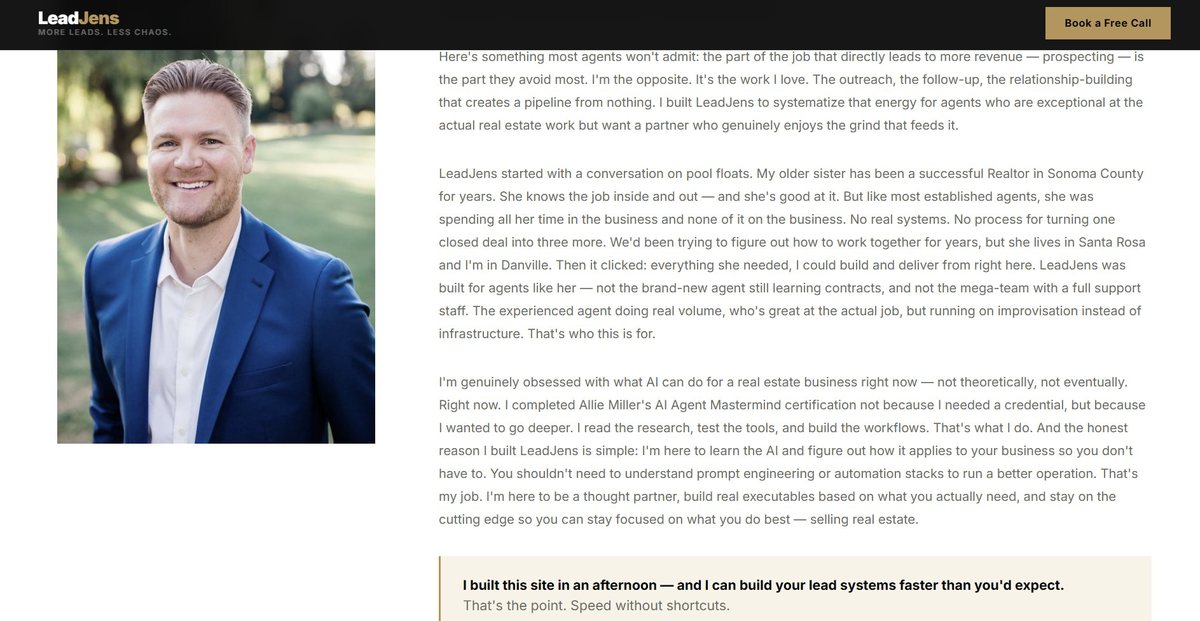
Hi — I'm Jens (of LeadJens; it's pronounced JENZ). Girl dad, husband, licensed Realtor®, Bay Area native, lover of comedies and iced coffee. Before real estate I spent most of my career as a VP of Sales building and training teams, which left me with a compulsion to turn chaos into repeatable systems. When I found Claude, I saw right away what it could do for an agent like Lauren. Real infrastructure for a business, the kind of systems I used to need a whole team to build. Every workflow in this guide is one I've built and tested in my own practice before writing it down.
Here's the one that still feels a little like magic to me: while I'm walking to coffee trying to “get my 10,000 steps in,” I can hand Claude a real job (build a branded market analysis, prep a listing presentation) and it works on and completes that job. Same when I'm out on broker tour or meeting an inspector. I come back to finished work instead of a to-do list. That move has a name, Dispatch, and it gets its own spot later.
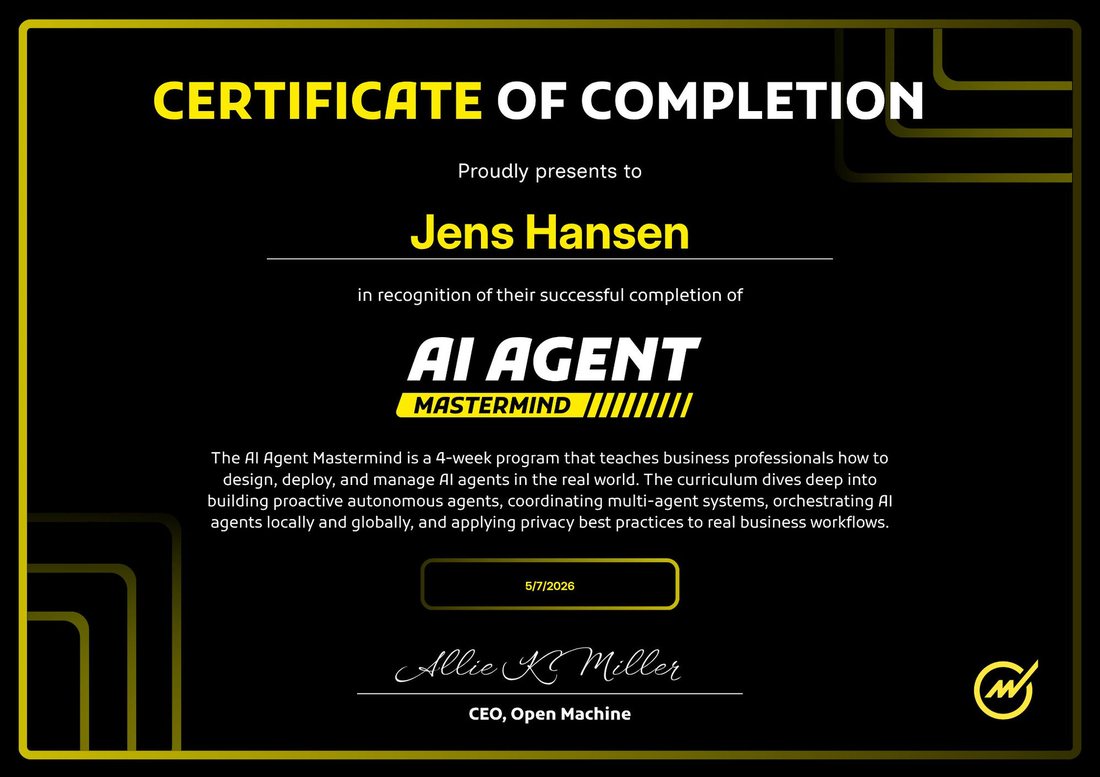
The part worth sitting with: almost nothing in this guide is something I could do three months ago. I'm not a developer. This spring I took a four-week course (Allie Miller's AI Agent Mastermind), sat down, did the work, and built these systems into my own practice. The barrier to entry has never been lower. If I can get here from a standing start, you're closer than you think.

One last thing before we start. Most agents who tried AI and bailed hit the same fixable problem: they treated it like a search engine and got search-engine results. This guide is the fix. And if at any point you think “I just need someone to set this up for me,” there's a link at the end to book a free 15-minute call. Just to hear about your business, your challenges, and see if I can point you in the right direction. No sales pitch. That's not how I work.
You, if you're Lauren.
Successful by every real measure — real transactions, real income, real relationships — and operating at or near capacity. Closing deals and still feeling behind. You can picture the systems you should have built; there just aren't enough hours.
Maybe you tried AI once, got generic output, and moved on. Maybe you assumed you'd have to become a tech person. Maybe you've got 100 past clients and no real system for staying in front of them. That's a structural problem with a structural fix, and it's exactly what this guide is for.
This is not for you if you've decided AI is hype, full stop. No guide will change that, and that's fine. I'll be here if it does.
And a note for everyone in between, including the agents who don't want to learn this themselves. Everyone likes to eat; not everyone wants to cook. If you can see that AI could help your business but have zero desire to sit down and learn it, that's a completely legitimate place to be. It's why I built LeadJens: I handle the AI layer so you don't have to become a tech person to get the benefit. Curious and want to try it yourself? Keep reading. Rather hand it off? Skip to the end.
Why most agents give up on AI
If you tried AI and walked away, you're not alone. What I hear constantly:
The output really was bad. Here's the thing though: the tool wasn't the problem. Someone told you to “just use AI,” which in practice meant type something into a chatbot and hope it solves a problem you've wrestled with for years. Of course that flopped.
And there's a second trap, quieter than the first. The agents who did get something useful often used it for one small thing — a listing description — decided it was a fancy auto-writer, and stopped there. That's the bigger miss. Bad output you can fix in an afternoon. Thinking too small costs you years. The real unlock isn't a better paragraph; it's handing Claude the parts of the job you actually dread.
The agents who get remarkable results aren't more tech-savvy. They treat Claude like a real collaborator, something worth giving context to and teaching about their business. That shift is the whole game.
Treat Claude like your smartest hire
When you hire someone — an assistant, a transaction coordinator, a marketing person — you don't hand them a task on day one and expect perfect work. You onboard them. You explain your business, your clients, your voice, what good looks like. As they learn you, their work gets better.
Claude works the same way.
Type “write a listing description for 123 Main Street” with no context and you get a generic listing description. You handed a new hire a task on day one with no onboarding, and you're surprised it came out flat.
Now imagine you told Claude:
“I'm an agent in Danville, CA. My clients are mostly families relocating from San Francisco and tech professionals from the East Bay. My writing is warm but direct — I don't use clichés like ‘cozy’ or ‘nestled.’ I want listing descriptions that lead with the lifestyle story of the home, then the features. Here's a description I'm proud of, plus my last 6 monthly newsletters so you can learn my voice: [examples]. Now help me write one for 123 Main Street, a 4-bed single-story rancher with a big backyard on a quiet street, backing to open space.”
Completely different input. Completely different output. The agents who fail treat Claude like a vending machine: insert prompt, push button, blame the machine. The agents who win treat it like a hire they're investing in. Before you ask it to do anything important, give it three things: who you are and what your business is, what good looks like (examples, tone), and what you need and why.
Build it a Context Vault. The single best move is to write one document that profiles you and your business: your market, your clients, your voice, your goals, your non-negotiables. Drop in a few listing descriptions and emails you're proud of, plus examples of copy you can't stand. The easiest way to start is to just ask. Open Claude and say, “I read a guide that said you work better when you know more about me, my business, and my goals — can we build that profile together?” It'll interview you and write the document for you. Any time you feel stuck, anywhere in this guide, that's the move: ask for help the way you'd ask a person.
One habit that's worth more than it sounds: capture your thinking while it's fresh, straight into Claude. The best context evaporates fast. The story behind a deal, why a neighborhood is special, what a client actually said at the closing table. Dump it the moment it happens. That's the raw material everything else is built from.
The shift under the shift: stop telling Claude how to do a task and start telling it what outcome you want. Hand it the goal and let it figure out the how. It's smart enough. I used to hand it tasks like it was the ticket-taker at the movie theater. Once I started handing it the outcome I actually wanted, it went from assistant to thinking partner.
Be specific, and give specific feedback. Same as training a person: the more precise you are about what you want and what missed, the faster it starts to sound like you. When something's off, say so plainly: “too stiff, I'd never say it this way, here's how I actually talk: [example].” When it nails something: “that's exactly right, remember this.” Feedback is the breakfast of champions. The more you put in, the more you get back.
And use it daily, or it won't stick. This is the part nobody tells you. Claude only pays off if it becomes a habit, not an occasional novelty. The agent who opens it once a month for a listing description stays stuck at mediocre, because every session starts cold. The agent who reaches for it every day, big stuff and small, ends up with something that compounds: not a dozen throwaway chats, but one assistant that knows a little more about their business every week. That's the real difference between the agents who pick this up and the ones who don't.
That shift, from vending machine to trusted hire, is the difference between the agents who try AI and quit and the agents who build something that compounds. (The deeper operator mechanics — running Claude across long projects, handing off context cleanly so quality never drifts — live in the advanced playbook. More on how to get there shortly.)
New to AI? Read straight through. You don't need to type formally or use special commands. Claude understands plain English, the way you'd talk to a colleague. (You don't even have to type — I dictate a lot of mine by voice and let Claude tidy it up.) You can literally say: “Hey Claude, stop using the phrase ‘circling back’ in any emails you write for me, and remember that going forward.” It'll do it, confirm it, and remember.
What is Claude?
Quick basics before we get to the fun stuff. If you've already played around with Claude, skim this part. If you haven't, here's the lay of the land in plain English.
Claude is an AI assistant made by a company called Anthropic. (Quick note for my fellow comedy nerds: not the scuba instructor from Along Came Polly — different Claude, and this one actually helps your business.) You talk to it like you'd talk to a very smart colleague — ask it things, give it tasks, share context — and it responds with thoughtful, nuanced answers.
Think of it less like a search engine and more like the sharpest person on your team, who never sleeps and has read everything about real estate, marketing, negotiation, and human psychology.
What it can do for you: write almost anything (emails, letters, listing descriptions, social posts, follow-up sequences), read and analyze documents you give it, think through a negotiation with you, and build repeatable systems you can run again and again.
What to keep in mind: Claude isn't magic. What you get out is tied directly to what you put in. On its own it reasons from what it's already learned plus whatever you give it, and you can also connect it to the live web and to apps you already use, like Gmail, which is where it gets really powerful. The better you get at giving it context, the more it can do for you.
Why Claude over ChatGPT or Gemini?
Fair question. My honest take on why I switched and haven't looked back:
It reasons more carefully. ChatGPT often gives you a confident answer fast; Claude thinks more deliberately. For nuanced work — negotiation strategy, reviewing a disclosure packet, writing a buyer letter that doesn't sound like every other agent's — that depth shows.
It handles long documents better. Claude can read an entire purchase agreement, disclosure packet, or inspection report in one conversation.
It's better on the human side. Real estate is emotional. Writing a buyer letter for a family that's lost five offers, or a careful message to a seller about a low offer, I need something that reads tone and stakes. Claude consistently does this better.
And Cowork is in a category by itself (more in Section 4). It gives Claude access to your actual files and lets it work on them across sessions. Nothing else comes close for building real business systems.
Which Claude plan is right for you?
Plain-English breakdown. Don't overthink it.
| Plan | Price | Best for |
|---|---|---|
| Free | $0/month | Testing it out. Limited messages, no advanced features. Fine for one afternoon. |
| Pro | $20/month | Working agents who want to build systems. Full access, longer context, more daily messages. Includes Cowork. Start here. |
| Team | $30/user/month | Small teams who want shared history and admin controls. |
| API / Claude Code | Usage-based | Developers building custom applications. Not for most agents. |
Start free, upgrade when you're hooked. The quick wins below work on the free plan. When you finish them and think “I want more of this,” upgrade to Pro: $20 a month, less than a tank of gas. One sharper offer letter, or one listing appointment you walked into better prepared, pays for it.
Chat vs. Cowork vs. Claude Code
Claude Chat (claude.ai) is where you start. The browser interface: you type, Claude responds. It handles 90% of what most agents will ever need: writing, research, brainstorming, document analysis.
Claude Cowork is the power mode. It gives Claude access to the files on your computer and lets it work on them across sessions: read PDFs, edit documents, analyze spreadsheets, build systems that run repeatedly. This is what I use to run my business.
Claude Code is a command-line tool for developers. Unless you're technical, you won't need it.
For most agents: start with Chat, graduate to Cowork when you're ready to build systems.
3 quick wins you can do this week
Concrete, specific, immediate. Each takes under 30 minutes, and each shows you what's possible when you give Claude real context. (Built your Context Vault already? These get sharper on their own — Claude leans on it, so you can drop the setup lines and just ask.)
Turn one client question into 3 pieces of content
Don't start with “what should I post?” Start with “what did a buyer or seller ask me this week?” “Is now a good time to buy?” “Should I wait for rates to drop before selling?” These are the exact questions people are typing into Google and ChatGPT right now.
“A buyer asked me this week: ‘[paste the actual question].’ Write a blog post answering it in my voice — conversational, like I'm talking to a smart friend over coffee, not writing for a textbook. Around 400 words. Lead with the honest answer, not a buildup. Include specific context about the [your market] market right now. End with a soft invitation to keep the conversation going, not a hard pitch.”
“Now write a shorter Google Business Profile version — 150 words max. Keep the conversational tone. Start with the question someone would actually search. End with one sentence inviting them to get in touch.”
Google Business posts are one of the highest-payoff things an agent can do for local search right now, and almost nobody does them consistently.
“Now turn the same content into a 6-slide Instagram carousel. Slide 1: a bold hook that stops the scroll. Slides 2–5: one clear point each, short sentences, no jargon. Slide 6: a call to action. Write each slide as actual caption text, not a description of what to write.”
One client question. Three platforms. One session.
One pro habit: on anything that touches rates, markets, or money, end the prompt with “flag anything that reads like financial or legal advice I'm not licensed to give.” It keeps your “is now a good time to buy?” answers helpful without stepping over a line you can't cross.
Why original beats recycled, now more than ever. When Instagram extended its original-content policy platform-wide this spring, the head of Instagram, Adam Mosseri, put it plainly:
“If most of what you post is someone else's content, your account is no longer going to be recommendable.”
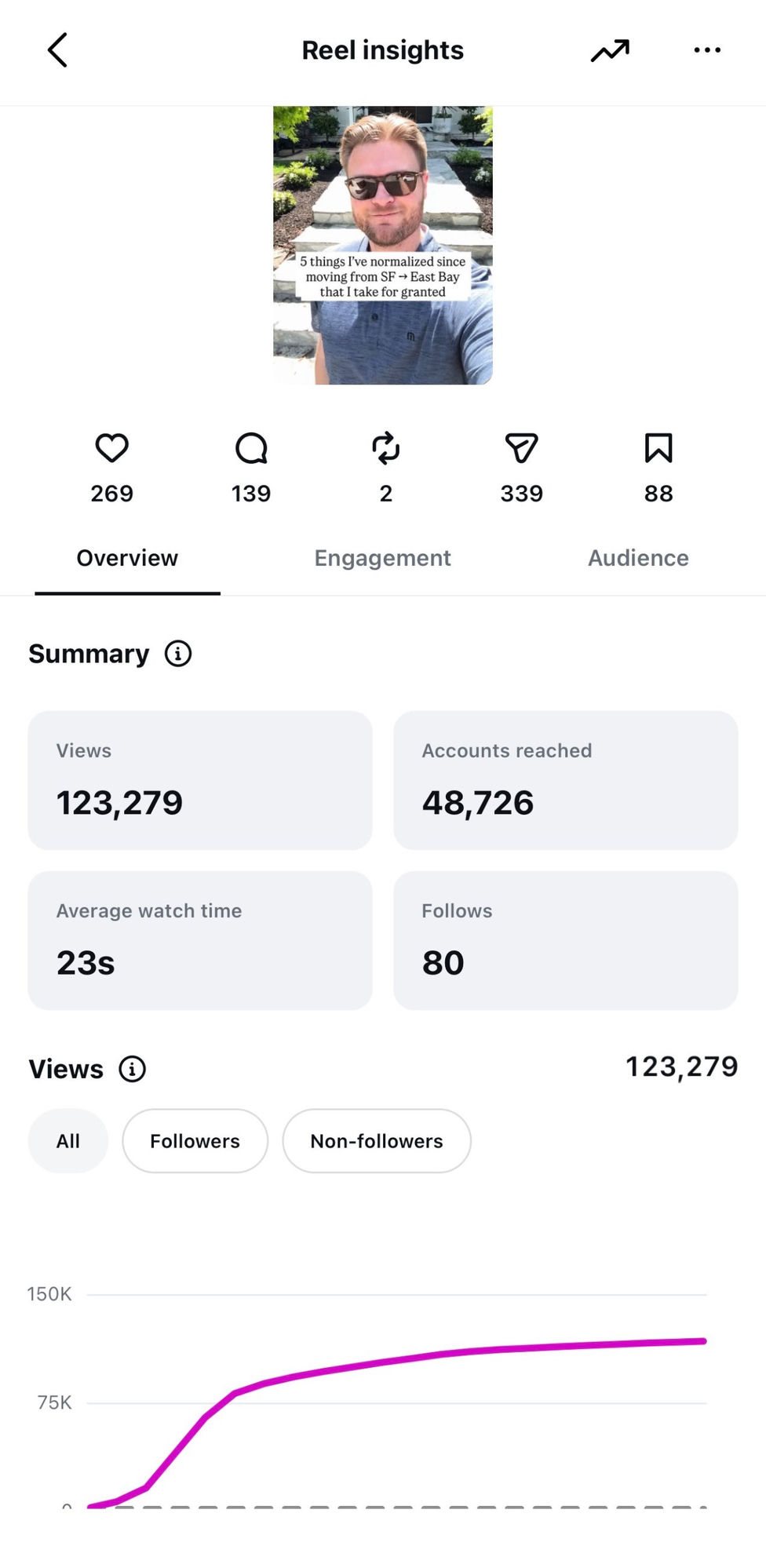
The templated, recycled stuff most agents post is getting buried. Original, useful content in your own voice is what gets rewarded now, and that's exactly what this workflow produces. Proof it works: I ran this exact approach on a reel that landed 123,000+ views and 339 saves. The saves are the part that matters. A save means someone filed it away to act on later.
Fix any email before you send it
Paste this in once, and Claude treats every email you share the same way:
“This is an important email. Assess its goal, analyze it for shortcomings against that goal, and rewrite it to fix them. Do this for any email I paste into this chat going forward.”
You paste a draft — a follow-up to a seller going cold, a price-reduction conversation you've been putting off — and Claude tells you what it's trying to accomplish, where it falls short, and rewrites it to actually do the job.
A word on “de-slopping.” You'll notice the same phrases show up constantly: “I hope this email finds you well.” “Circling back.” “Please don't hesitate.” That's AI slop, the filler that signals a machine wrote it. Your clients notice. Here's the difference:
Hi there,
I hope this email finds you well! I'm thrilled to share that a stunning new home has just hit the market in one of Danville's most sought-after neighborhoods. This isn't just a house — it's a lifestyle.
Nestled on a quiet street, this beautiful property boasts 4 bedrooms, a gourmet chef's kitchen, and seamless indoor-outdoor flow perfect for entertaining. With its timeless charm and modern upgrades, this turnkey gem truly has it all.
In today's fast-paced market, opportunities like this don't last long. Whether you're looking to buy, sell, or simply explore your options, I'm here to guide you every step of the way.
Hi friends —
A home just hit the market in our Woodbine neighborhood here in Danville, and I wanted to pass it along in case it's helpful to you or someone you know.
My wife and I have lived here since 2017 and love it — there's almost no turnover (one home sold here all of last year), so these don't come up often. Walkable to downtown and Vista Grande Elementary, great playground with basketball and tennis courts, just an easy place to raise a family.
If this isn't relevant for you, no worries at all. But if someone comes to mind who's been talking about Danville or Alamo, feel free to send it their way.
Hope you're having a great week, Jens
The difference is the facts only I'd know. The “before” sells with adjectives (stunning, gourmet, seamless, turnkey). The “after” sells with the turnover, the school, the neighborhood I actually live in. After Claude drafts something, add one line:
“Now de-slop this. Cut any filler, corporate language, or anything that sounds like AI wrote it. Keep my voice — direct, warm, specific. If a sentence doesn't add anything, cut it.”
Better yet, make it permanent. Add it to your Custom Instructions (the standing-orders setting Claude applies to every new chat): “Never use phrases like ‘I hope this finds you well,’ ‘circling back,’ ‘reaching out,’ or ‘please don't hesitate.’ If I use them, remove them.” Done once, active forever.
Upload your MLS data and let Claude find the story
Pull an MLS export — recent sales in your market — and upload it. Then ask for two things: the numbers you already track, and the trend you didn't know to look for.
“Here's an MLS export of [area] sales from the last 90 days. Give me the days on market, sale-to-list price ratio, and number of offers — then find one hidden trend in this data that [your specific audience — say, downsizers in Alamo] would actually care about and that most agents would miss.”
The first half confirms what you'd expect. The second half earns its place: Claude will surface something like “single-story homes under 2,000 square feet are going pending nine days faster and over asking, while everything else sits.” That's the kind of specific, local read that makes a downsizer trust you, and it's a ready-made content hook for Quick Win #1.
Pick one of these three and do it this week. Agents who actually change how they work start with one win, not all three.
The 30-second test
Here's something most agents have never checked. Open a private browser window and ask ChatGPT: “Give me the top 3 real estate agents in [your town].” Run it twice. Are you in the answer?
Most agents aren't. Not for lack of being good. AI builds its picture of you from whatever it can find scattered across the web, and most agents have left that to chance. Meanwhile, your next buyer or seller is asking AI this exact question before they ever call you.
And this matters more every month. Half of consumers now say they'd trust AI for major life decisions — health, insurance, money — according to a 2025 Smart Communications study, and that share has been climbing fast. A home is the biggest financial decision most people ever make, and buyers are starting to ask AI about it first. Your clients still trust you more, for now: 85% of buyers call their agent their most trusted source of information (NAR, 2025). But watch the slope. Within a couple of years, the average client checks the AI's answer first and yours second. The agent who isn't in that answer is invisible at the exact moment of highest intent.
This is your AI visibility — whether AI tools name you when a buyer or seller asks — and it's a different game from old-school SEO (getting your website to rank on a Google search page). Google ranks pages. AI tools recommend people. Five things move the needle:
Make your website readable to AI. Add what's called schema markup: a bit of behind-the-scenes code that spells out your name, title, market, and specialty in a format AI can actually read.
Get your Google reviews onto your own website. Most AI tools can't read your Google profile directly, so those 47 five-star reviews are invisible if they only live on Google.
Write content the way buyers actually ask questions. Skip “Top 5 Reasons to Buy in Danville.” Write the question they actually type: “Is it a good time to sell in Danville right now?”
Lock down your name everywhere. Same name, title, phone, and city across every directory, so AI doesn't get confused about who you are.
Write video captions like they're the whole post. AI doesn't watch your video; it reads the caption.
I ran this audit on my own site and found three of these gaps. Each took under an hour to fix.
You could stop here — and you'd be ahead
If you've made it this far, well done. Most agents skim two sections and bail. You didn't.
And I mean this: you now have everything you need to start. Close the guide, run one client question through Claude or pull up your last MLS export, and you're getting value this week.
Before you scroll on telling yourself you'll get to it later, I know you. As Ben Stiller's character puts it in Dodgeball: “I know you, and you know you, and I know you know that I know you.” So don't just keep reading. The rest is the bonus reel, where this goes when you're ready. Skim it, save it for a rainy Sunday, but pick one action and commit before you go further.
The systems I actually run
This is what's running in my business right now. I'm not going to walk you through building each one here. That's the advanced playbook (Part 2, and I'll show you how to get it in a second). For now, just see what's possible. (Every real client name and address below is swapped for a TV or movie character — for privacy, and because roughly 99% of my memory is reserved for movie quotes.)
The thread through all of these is the same: build the system once, and it runs every week for the rest of your career.
Want the playbook? Here's how to get it
Everything above is the what's possible. The advanced playbook, Part 2, is the how: the exact prompts I use to build these, plus the one big kickoff prompt that sets Claude up as your Chief of Staff in a single session.
Here's the honest reason there's a gate. Industry surveys this year put numbers to something most agents already feel: 83% of brokerages say it matters that their agents use AI tools, but only about 1 in 3 actually provide them (Inman, 2026). Most agents are being told AI matters and handed nothing to act on. I'd rather not leave you there.
So here's the trade. Take my free AI Visibility Assessment. It's the 30-Second Test done properly: I'll show you exactly where you stand in AI today and why, in plain English. The moment you do, I'll send you Part 2 — the advanced prompts plus the kickoff prompt that sets Claude up as your Chief of Staff in one session. You find out whether AI can even see you right now, and you get the playbook to do something about it.
What this would look like for you
Think about cooking. Some people love it. They shop, prep, cook, clean up, and there's real satisfaction in building from scratch. Other people just want to eat, so they open DoorDash and dinner shows up. No shame in it; it's a rational call about how you want to spend your time.
AI is the same split. This guide is for the people who want to learn to cook. If that's you, keep going, try the quick wins, build.
But some of you will decide, correctly, that you'd rather order DoorDash. That's what LeadJens is. Here's how I work: you go 90, I'll go 10. (Yes, that's the Hitch line.) It's done-with-you. I'm your AI accountability partner, in it alongside you. You bring the market knowledge and the relationships only you have; I build the systems (every one of them tested in my own practice first). You put in your order; I take care of the rest.
The real reason you might not
There's a real reason “someday” never comes. A researcher named Piers Steel built the formula for it:
Motivation = (Expectancy × Value) ÷ (1 + Impulsiveness × Delay)
In plain English: you act when you believe you can pull it off and you actually want the payoff, and you stall the further away that payoff feels. Delay is the killer. This whole guide is built to beat that equation. Seeing a non-developer build all of this from a standing start should raise your belief that you can do it too. The quick wins put a real payoff within reach this week instead of next quarter. The only variable left is you deciding to start.
So be a doer. Doers build the momentum the planners never get. Don't read this, feel fired up for an afternoon, and let it evaporate by Thursday. Pick one small thing and do it: take the free AI Visibility Assessment, book the call, or run one quick win. One small action that compounds beats the biggest plan you never start.
Book your free 15-minute call
No pitch. Just a real conversation about your business and where to begin.